“Let us hold that portal open for you, in the form of your little crush on him, of light streaming down, and feel a surrounding new ideal,” they say to me.
— Mei-mei Berssenbrugge, “The New Boy 2”
Nor is there cause for grieving
Nor is there cause for carrying on
— Joanna Newsom, “Anecdotes”
NOVELTY GIFTS
I could write repetition precisely by avoiding it, by chasing novelty as I always do, refreshing playlists or eating somewhere I haven’t before, heat-seeking new obsessions at birthday parties, locating the angle of approach that best lets in the light of idealization, and that light mold them into, like, an Eros Energy Bar, to sustain my joie de vivre for anywhere from a week to half a year, before the next best thing comes along.
The last boy in this lineage had eyes as if with no pupils, opaque obsidian disks, we guessed each other’s astrology but guessed so deep we hit our Moon rather than our Sun Signs, he works as an archivist in a small town in South Ontario slipping cryptid hoaxes into the historical record, he makes art that revives Sumerian perspectives, he is completely emotionally, romantically unavailable, he is a pure dork flush with passion for his craft, a breath of fresh air from the city’s dogpiling careerists.
Novelty is a particularly dense manifestation of relying on the Other to become simultaneously the grounding of and the escape from the Self. I can outsource the meaning of my being into the crushable phenomenon. In this bubble of rapture – propelled by the first decisive spark of fascination – I undertake an archeology of singularity: I drop into the texture of their voice, the shape their hands make unthinkingly, the whole encyclopedia of nervous tics and telltale signs; I let loose carefully-considered rapid-fire questions to excavate the full unconscious history of another person; bonus points if I come upon a jewel of personhood they themselves have not considered, and can hand them what I’ve extracted as a return for the gift of their free self-disclosure.
This mode of being is truly, even helplessly immersed in the act of paying attention. This attention resembles the sturdy attitude of Be Here Now prized by wisdom traditions; it seems to manifest what Chogyam Trungpa calls “the precision and openness and intelligence of the present.” But it’s conditional to one person – it’s a selective attention that hinges on them – it turns the All-One into the only you. So it’s not ultimately presence with the present, which must be open to any given presence, not just the divinely highlighted presence of the crush.
This mode of being doesn’t know what to do with the dailiness that remains in a relationship. No single crush can sustain the fascinating-rapturous transference forever, and in the wake of my sufficiently exhaustive knowledge (of their fundamental narratives, of their hinge memories, of their patterns of conduct), intensity flattens into dull plateau. There’s always more to learn about someone, but it comes at a slower drip after the honeymoon moment has passed. And why should I stay with that slowness when I could whiplash over to the next crush? How does my hardwired demand for stimulation delimit the possible forms that relation takes? Is it possible to be in relation to the beloved other in the simple ebb and flow of the world, rather than under the spectacular logic that makes them the only stone in the stream, around which my whole life runs?
OPEN SECRET CASKET
Dear T, you were the first crush worthy of the name. Every obsessive boy cathexis I made after you was an echo of “ours.” I don’t know what pronoun to use there because I’m the maker of these obsessions – what right do I have to make you responsible? And yet it was you, appearing, a face from the deep, carrying hands around that you believed would stain whatever they touched. You in your singularity, worried over and beloved by anyone who met you. The spectacle of your pain ran so deep that it permeated your presence, and we united on the plane of you helplessly showing it to me and me helplessly attending to it.
When they found your body slumped in the kitchen, your face had sunk into a bag of sugar. I never got to see your body before it got flown out West, and its omission from my life makes waves, a skipped stone skipped. We came up with our own rites for you in Toronto, where I met people who loved you recently, who encountered your sunken lucidity when I could no longer recognize it, when you seemed to have changed so much I turned away from you to try to preserve you as you were, and became insensate to your change; so to know that you were so alive in your final years was the greatest comfort of the funeral.
In one of the best memories I have of you, you’re driving me around Port Moody in your father’s Tesla. You were amused that I’d taken you to an all-you-can-eat hot pot joint; I was amused to see you piloting that incongruous car with such second nature. We delivered Xmas poinsettias to my mentor’s estranged family and the Vancouver night made the future feel open, free.
Sometimes in a dreadful frenzy I pull up all the media of our correspondence. The last four years of our sporadic correspondence is built from a volleying between “I miss you,” “I love you” and our futile attempts to make plans. We were living along different cadences of time: mine calendrical, yours nomadic, defined by the refusal to risk ever feeling at home. You slept for days at a time, under serious sunlight, unwilling to awaken into the bleak world. I can’t shake how your smile was shadowed by guilt at joy itself, unless you were blackout drunk, and you were relieved of shame because relieved of memory altogether. I can’t stop putting you into words, scattering reasons to remember you into any given thing I do; I’ve learned grief as the repetition of this process of absorption – of encryption as inscription that puts you deeper into me by writing you out.
In one of the last memories I have of you, we’re in the park singing Good Intentions Paving Company on my portable karaoke system. You had a kind of perfect pitch that was down so low it drew out the cloaked bitterness in Joanna’s baroque timbre. The truth of the matter is, you never quite knew how to become born in this world, the world we both shared and never would. Your death just rips mine open.
But it can make you feel over and old –
Lord you know it’s a shame,
When I only want for you to pull over and hold
me, til I can’t remember my own name
ERA
In the ditzy light of morning, with fog coming off the water and the river boiling itself to life, Martin holds me.
At the festival, hundreds of dancers poise at the windswept threshold, the air between them made of marmalade and geranium.
My body had looped into this perpetual comedown state, little shocks of leftover pleasure lapping against the melancholy of their upcoming disappearance.
Martin has a natural intensity of focus that he derails with constant punchlines, always trying to spin his world two degrees off its axis: just enough, not too much.
He’s a tease, insofar as he pays attention to my life to an exacting degree behind the scenes, insofar as he lays both feet in my lap before he falls asleep.
We catalyze our cautious desire for each other through the channel of hot boys we both want, diffusing desire’s intensity by making triangles in our triangulation factory.
A wealthy bro on a titanium seadoo moons us as he passes, and we flip him a full flock of birds in response, his little boat trailing an emasculated wake.
I call this era “the cessation of yearning,” as if making a promise to myself to change: I would become something other than an unrequited lover, no longer the same boy of yesteryear who bounced from crush to crush, each new one a distraction from the impossibility of the last.
Agape, Storge, Philia, Eros; Metta, Karuna, Mudita, Upekkha. All the variegated names of love fall like pollen from the sky, as though love were made to be carved into categories.
I picked the word adoration from among them. Adoration, meaning “to pay divine honours.” Adoration, meaning the “adorable,” that thing whose cuteness seems to need protection. It’s the kind of love that mixes devotion to a higher power with responsibility over the helpless.
Adoration as opposed to desire, that insatiable agent of lack, the cunning animal that spurs the pursuit.
I want to worship the life that abounds within the love that’s given, to live within the richness of what’s already there.
I watch Martin lay a poultice on the torso of a half-drowned twink to wake him; his nimble hands play doctor until the victim draws a first wet breath.
Every time I see Martin he’s vigilant to the crises of strangers, his aura perked like an alert meerkat; and more than anything else I want to be the one who watches the watchman.
But Martin is trained in a tradition of healing, whereas all I have is an aspiration, the whisper of tradition, and my convalescent intuition.
The situation of my adoration is proven thrice over: by jealousy extinguished at the gate of its realization; by the moon speaking down on me with rhinestone teeth; by his mothlike mustache catching at the corners of my dreams.
INFOMERCIAL: HOW TO MAKE A SONG FROM INTUITION
Feeling adrift from your in-the-flesh friends?
Alienated from your primordial origins?
Are you stricken by a basic bitch understanding of desire as: the drive for superficial novelty?
This practice is designed to return you to the Oldest Thing Imaginable – a slice of preconsciousness we’ve all passed through, whether in the womb as individuals or in the infancy of our species being.
Try it at home and send me your experiential feedback: fanwu4u@gmail.com.
No refunds on shruti boxes purchased during this process.
- Invite a friend over to your house – someone you trust implicitly, where there’s next to no shame or self-consciousness that passes between the both.
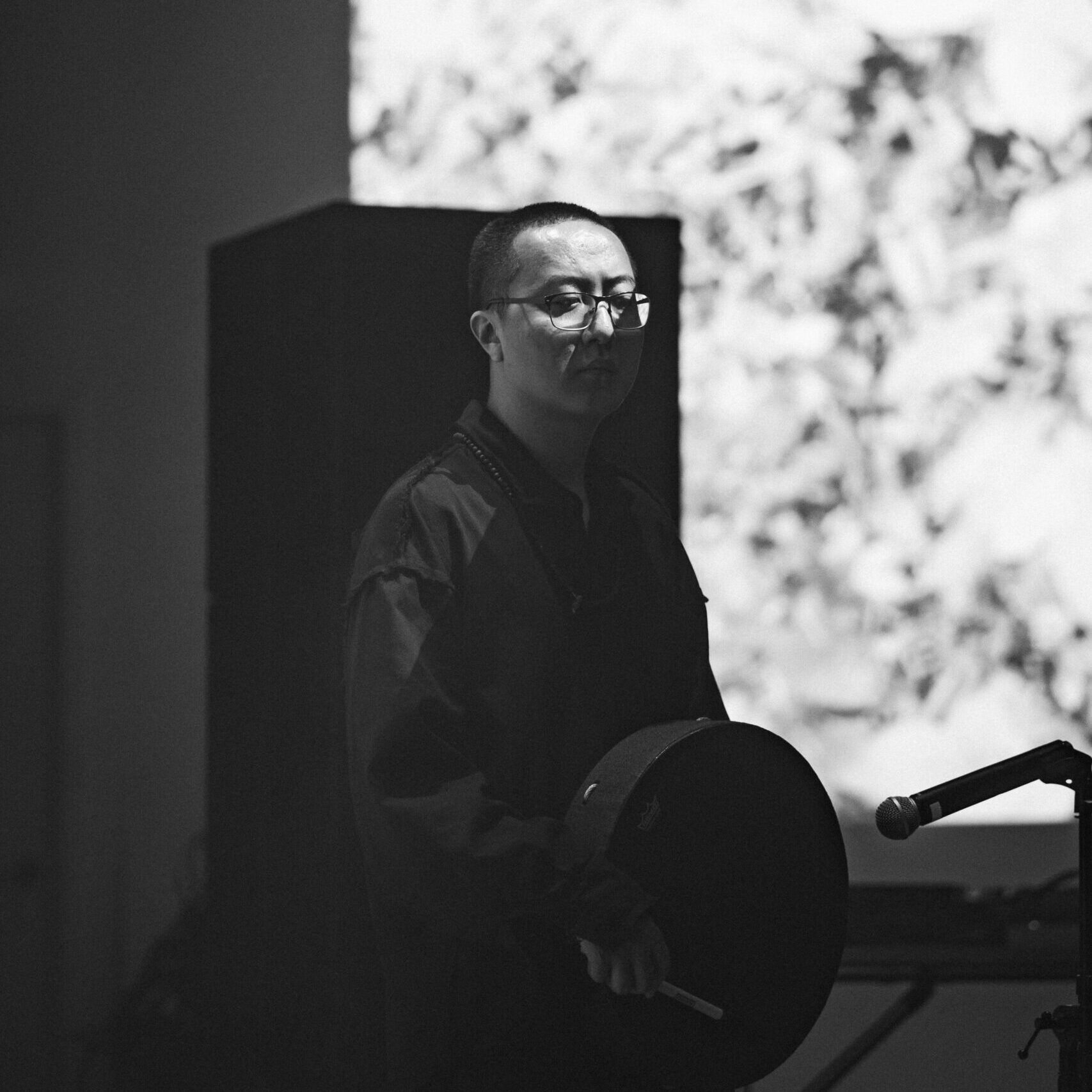
- You’ll need two instruments that respond well to intuition. A shruti box, a slide guitar, a simple synth keyboard, a contrabass accordion, a hand drum: these are tremendous grounding tools to pump sonic meditation outward in concentric waves.
- Each of you will play one instrument. You simply respond to each other. There is no demand to get anywhere or make anything in particular. Let your intuition bypass your cognition. You are in a primal swamp of sound; all human elements are dimmed to low.
- Switch instruments.
- In the next round, you’ll add the intention of using your voice. Your two voices climb across each other like pothos. You’re singing in a vortex of neither-right-nor-wrong; you’re rather more interested in exploring where it’s possible to make voice from: a cheek joins in the action, then a deep gut note, then a hum from the sinus.
- In the next round, you add the intention of settling on a melody. You invite repetition and recognize its rightness through pleasure. This melodic sequence is your “chorus.”
- In the next round, you add the intention of language. You’re now far away from warbling slime, and you tentatively enter the world of symbols, always composing from the sound of words rather than their meaning, warping your mouth into shapes you see fit. (e.g. in the last iteration of this practice, F and I stumbled on the phrase “We know we’re the weary / We nowhere the weary.”)
BONUS. Perhaps this friend has musical chops, so they’ve brought along a guitar, a keyboard, a lap steel – something that requires more technique to play. With such an instrument, you may end up with something people might recognize as a fully-fledged (pop) song.
Congratulations! You’ve achieved evolution in the span of an evening.
ROGUELIKE
Sickly loop, since I could remember, since Starcraft and Diablo II. My alpha and omega. If the crush is defined by obsession, video games were my first. Wan hours poring over the screen, full immersion in the Zerg factions, in my Lightning Fury Amazon. A boyhood vampired away to the game designer masterminds at Blizzard, whose games scaled and iterated infinitely. Jody says it sounds like puking on the bathroom floor of reality, then cruising in the same stall. After you complete one runthrough, you repeat the game again at a higher difficulty where everything is the same except the monsters have more modifiers. Act Two, Act Three. These modifiers get added layer by layer, so you grind to get stronger.
The same-old-same-old is new again. Within the gameworld’s self-sufficient enclosure of meaning, real life is effectively neutralized and substituted for artificial achievements. It’s a badge-of-honour endorphin button system. Here’s an extra life, a checkpoint, a New Game Plus – stages along the way to eternity.
The roguelike is a genre of game defined by permadeath – when you die, you start over from the beginning – and procedural generation – when you start over, you start over into a new world generated from a nearly infinite set of possibilities. An evolution of previous forms, the roguelike’s perfected the intrinsic addictiveness of video games by making randomness a main character. In each runthrough – with each world that you’re generated into – you encounter a selection of items and choices taken from out of the pool of possible items and choices, and you must adapt according to what’s thrown at you. The classics of this genre, Slay the Spire and The Binding of Isaac, understand the thrill in how slight variations – spontaneous encounter stacked upon spontaneous encounter – make all the difference.
The roguelike is the proof of the depression my happy-go-lucky veneer can’t disarm. I thought I embraced emptiness ontology: after all, I pour all that Daoist-Buddhist cosmology into my life day after day. But when I sit for a whole day at the roguelike factory I am running away from a tougher, more terrifying emptiness that sits inside of me, an individuated emptiness with a flinty, existential face, not the sandflow softness of the Dao.
How do we break free of the repetitions that have claimed us since childhood? The gambit of psychoanalysis is that it builds, within the psyche of the analysand, a gap mechanism that resembles freedom. It presents the subject with (at least the illusion of) choice by slowing down the reactivity of the habit, which acts immediately: given free time, therefore roguelike all day. It loosens the chains of causation. That’s its promise and my prayer: dear Doctor, give me the strength to tweak my destiny, even if the swerve drives straight through my skull. At what great cost do we change?
I know better than to be ashamed over my own mechanisms; psychoanalysis teaches us that there’s no outside to ordinary neurosis. Yet when I wake from my stupor, shame comes calling to me for shuttering my accomplishments away in a virtual world. The games reward me with “achievements” for reaching the next artificial tier of completion. How could you afford to spend time on this while the world is what it is right now? I think of the fly caught on the spider’s web whose every struggling act of resistance makes it further enmeshed in the web, tenderizing its own meat for the predator. The roguelike, and its deployment of repetition, has taught me so much: about depersonalization, flight from the discomfort of embodiment, the nature of pleasure, and the way that design works to stim up the human Pavlovian loop of risk and reward. It’s shown me the self-obliterating pull of an unreal world. The only way to escape such gravity is to give up the fight.
DAMASCENE
fresh pack of cards
new novelty surge
foundation made of flickers
a folio of first kisses
my body in silk
with the bloat wrung out:
send a prayer
thru my tickled lips
for the marbled world
to drip with freshness
that factory cardboard
the forever talking through
the bedtime eternal
boy in back pocket
the naive and the novel
next to each other
tending to the innate
my half-lidded gaze
sifting in time
the nth dimensional wager
the sickness-surfeit scale
the ontological crab
rangoon
to my proclivities
and their way of telling life
and their way of being doomed,
send this prayer:
O wilt thou
my soul therefore
allay into
that ornamental groove
my spirit return
to starved eyes
fisted into dirt
my brain render
soup of the sun
before it browns the rim
before it buries that old
infinity anew