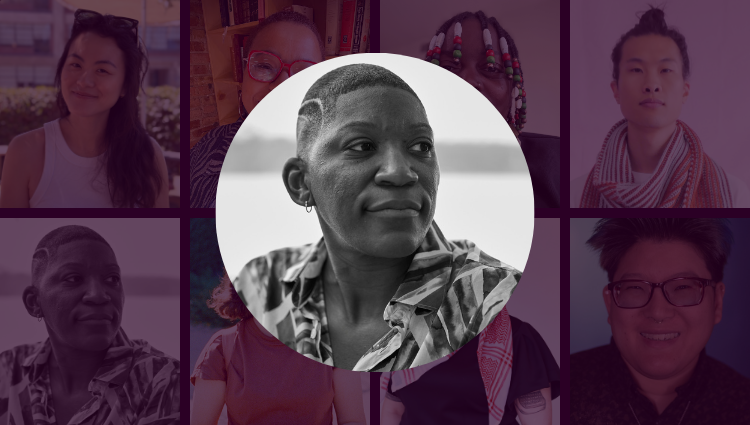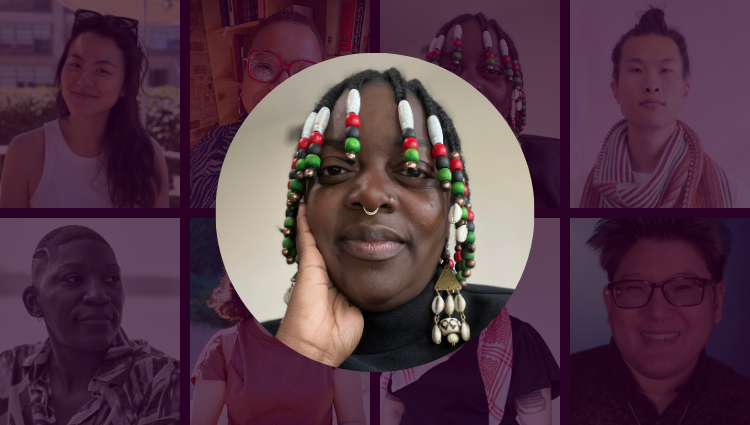
Belinda Bellinger was one of our Spring 2025 Digital Residents. As a part of this program, we do Q&As with our residents to feature them, their work, and their words. See our Q&A with Belinda below, and explore more Spotlights here.
TSW: Tell us about your work, writing, or project. What are you writing these days? How is your work changing, and how is it changing you?
Belinda Bellinger: When I signed on for the Spring residency, I thought I would be able to return to my writing after surviving a traumatic event. I was breathing new life into an old poetry manuscript titled “Rage Race,” which chronicles the experience of a richly-melanated Black girl coming of age in San Francisco. Throughout the residency, my work shifted from how one responds to rage when pained to explicitly describing the pain felt based on harm experienced.
My work is changing me, because it is getting me to tussle with that Hess Love calls “sustainable rage,” which has changed how I perceive the little rich-skinned girl rage in my manuscript. Previously, I thought I could be done with rage if I wrote these poems. But as James Baldwin noted, to be Black in America is to be in rage all the time, and the change in focus from releasing so it does not exist to naming it so the form and shape justice must take is clear feels more vulnerable and true as both a poet and writer.
TSW: What is a question you’re asking yourself these days, and what is a question you or your work is asking of your reader?
BB: A question I ask myself these days is am I writing to escape pain? I ask this question because in writing for my inner child, I contend with the feelings she did not get to express. When it is overwhelming, I think I do that thing that some parents do where they minimize how challenging something is so their child won’t get upset. I wonder if it does impede my ability to name specific moments or emotions.
Sometimes, I wonder how reliable I am as a narrator if I gloss over some truths in my writing. Yet, during the revision process, I am reminded of the ways shame lies among pain that encourages the truth to come clean behind the veil of safety. As a result, my work and I are asking readers if we can commit to removing the layers of shame that keep us from getting justice for our inner child. Our younger selves need us to do this work. They are waiting on us to feel our anger deeply. They are waiting on us to free their shame.
TSW: Who do you bring into the room with you when you write, and/or, who do you consider your work to be in conversation with? Who are you writing for?
BB: I write for my inner child. When I was fourteen, I joined a youth advocacy group that held a container for youth voice and trained us to speak our truth to adults and authority figures. This happened during a time when I was coming to terms with the silence I carried as a result of being told what to do, think, and feel by my father, at the time. Looking back on this time, even though I was in an organization that honored my voice, it was still so much work to break away from how I was conditioned to relate to adults with positional power. My younger self is bursting with stories to tell and as I reparent myself, I am able to create a container where we can make meaning together about our experiences. This process is powerful because I know each time I sit down to write, I am bringing all of my familial and literary ancestors into the room with me. It is as if my younger self gets to have a conversation with her elders in order to make sense of the past, present, and future; I would likened it to time-traveling or sankofa or as my therapist would call it, “Afropresentism,” because I am taking the past and future, to keep myself grounded in the present. I write for those who are in a similar process but may get overwhelmed when they attempt to explain it.
TSW: What motivates you to keep beginning, and/or, what is a story that gave you permission to tell yours?
BB: SG Huerta motivates me to keep beginning again. During the Spring residency, I read their work titled, “Good Grief,” and I was inspired by their ability to put the truth of a hard topic on the page. Huerta gave me permission to write my own story about me and my father’s complicated relationship. They reminded me that I already gave myself permission to right my version of the neglect, abandonment, and abuse I experienced as a child, and how I had to figure how to cope with the aftermath in my early adult years. They motivated me to name a thing a thing, and not shy around. Huerta does an amazing job of staying true to their voice in their work; I can hear them in each word. Their angst, resolve, and rage.