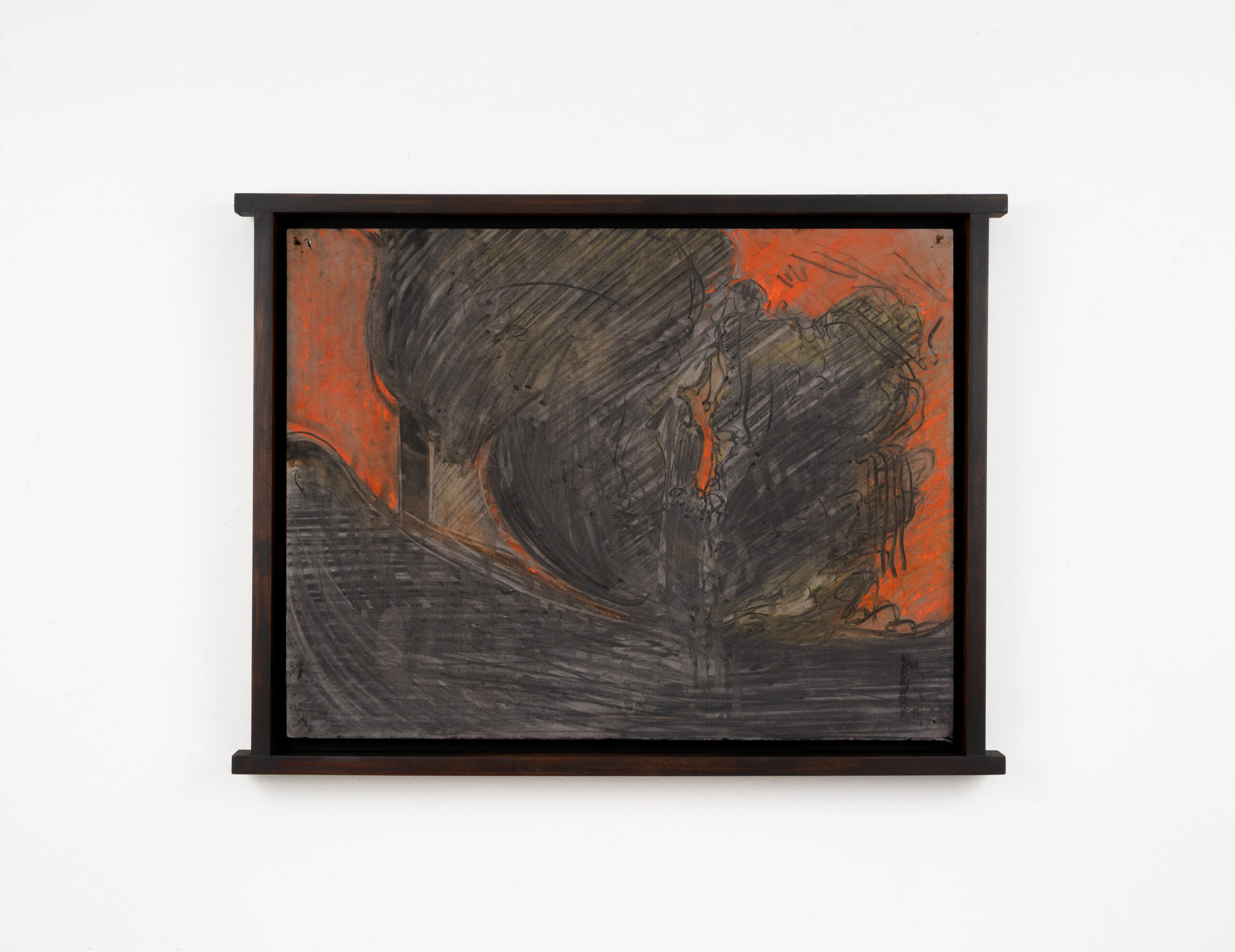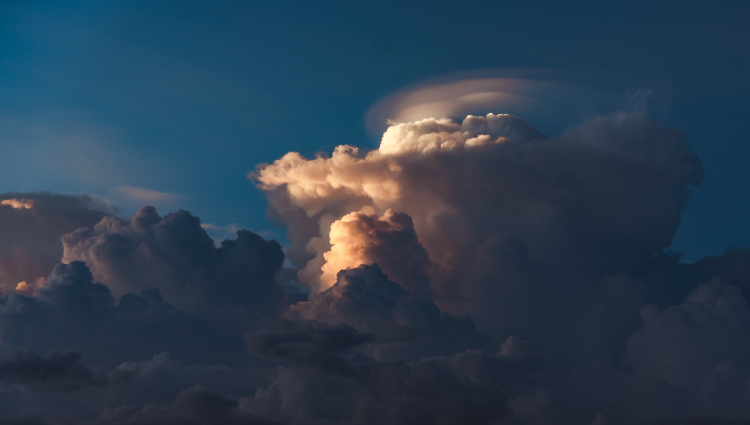
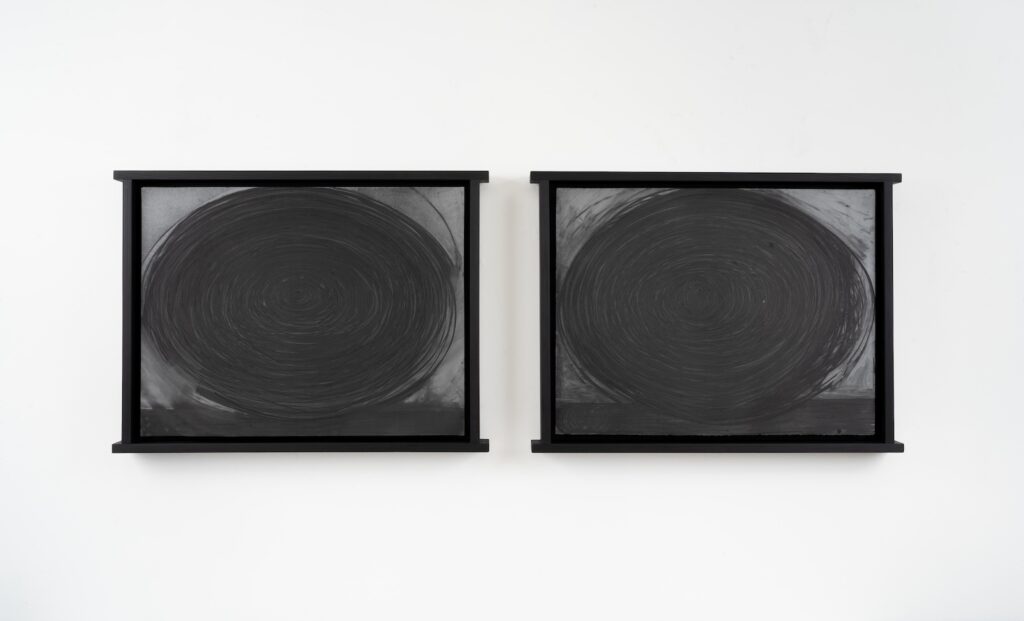
“creation myth” is an attempt to explode convention and singularity, born partly out of my frustrations trying to work across research fields as a disabled, neurodivergent scholar and writer within systems and scholastic standards that are frequently hostile both to interdisciplinary approaches and to disabled existence altogether.
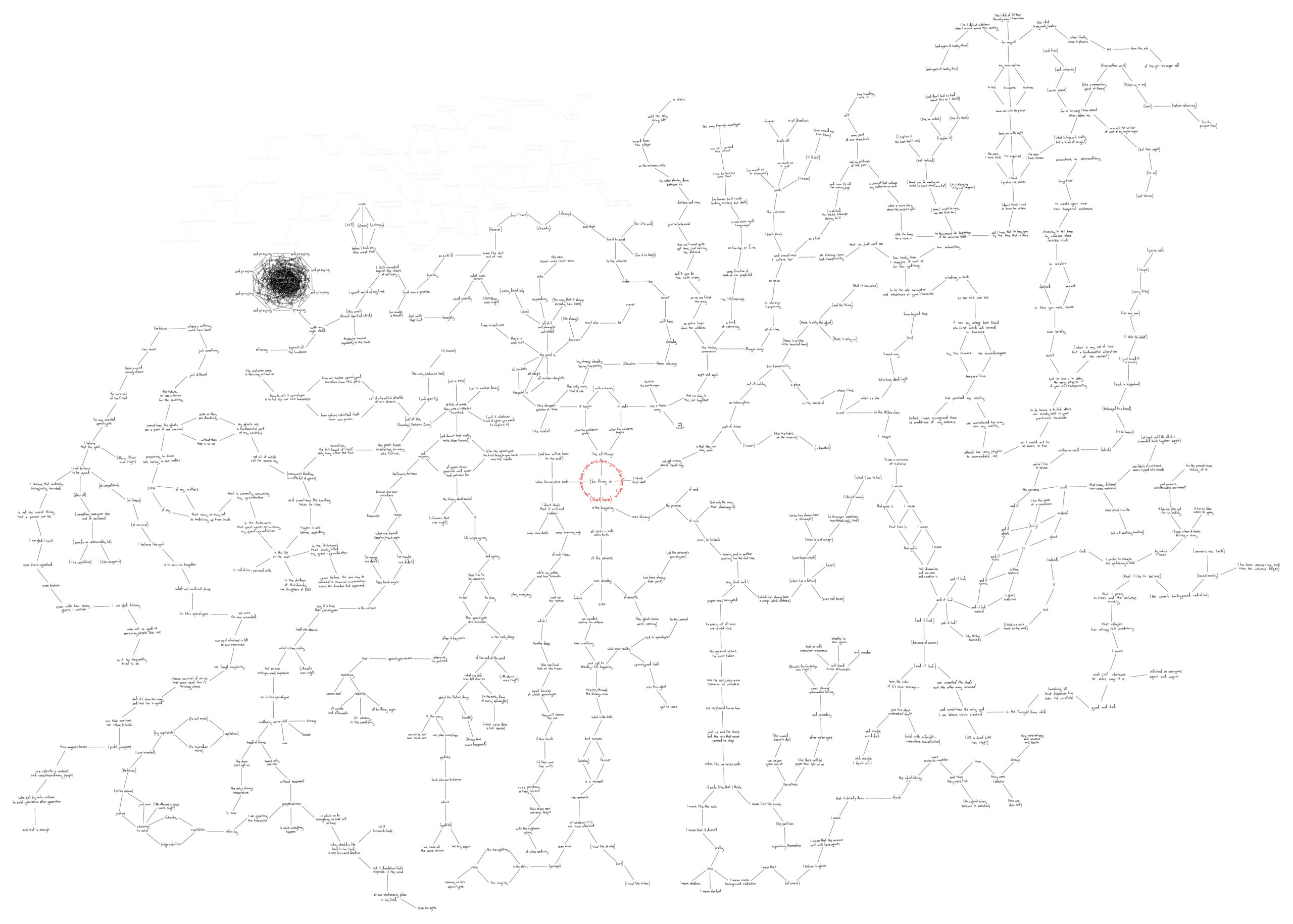
There is no fixed sequence or linearity to the radiating textual pathways—rather, I invite readers to begin at (and return to) the central point again and again as they create their own chronology of the chaos, each experiencing it just slightly different from anyone else, such that the very act of reading the piece implicates the reader themself in the process of its collapse and re-creation.

It began as an exercise in imagining what my work might look like if I didn’t have to perform my thoughts and ideas through particular, singular forms and restrictive structures, and instead allowed them to move and flow and associate in a way that was actually conducive to me and to the work I am interested in doing. The resulting form was a beautiful, expansive galaxy I’ve been calling a chaos.

It is designed to visually replicate the physical and temporal structure of the universe exploding into being and expanding outwards in every direction, with additional inspiration drawn from images of galaxy clusters captured by the James Webb Telescope.


Above are four strands of experience. Click into any to see an enlarged view and to follow one chain of thought.
I see the outwardly-expanding pathways of this piece as combining a multitude of creation mythologies—the universal, personal, religious, speculative, philosophical, communal, historical, scientific, theoretical, fictional—of varying scales, collapsing more and more of the distinctions between disciplines and genres as they expand further outwards.

By questioning how we construct (and what we construct as) creations and endings, origins and apocalypses, my goal is to explore how collapsing the ideas and systems we believe to be foundational to human existence (past and/or present, individual or collective) can be a means of creation and caretaking and rebuilding and revolution, and the ways in which to construct something as an ending means we often choose to ignore how—and for whom—it is also a beginning, and vice versa.