
Editor’s Note
This note started to coalesce while roadtripping through the American South. An unchanging milk-gray sky had hung over the region for a week, and the highways, as I drove through Alabama, Georgia and Florida, were rain-beaten and slick. Days of slippery stagnation not unlike creatures sloshing in mud–stuck but moving, that dumbfounding kind of inertia that always threatens to overtake the South. Road trips offer too much time, too much unfurling road to spitwad with memories or paint with overdetermined futures.
Earlier that week, “Operation Swamp Sweep” had started in New Orleans. I had planned to drive there on my roadtrip before ultimately deciding to steer clear of the city, moving parallel to the incoming storm of ICE agents. I imagined the masked officers descending on the neighborhoods, deploying their illegal enforcement tactics–dangerous car chase maneuvers, reckless deployments of crowd control projectiles; epithets, spit, rubber bullets, tear gas; and their continued unlawful assault and detainment of citizens and immigrants. I fixated on the legality of it all because I was raised by a police officer, twenty-five plus years on the job, who plans to retire in a few months. On my way back home to Tallahassee, I listened to Lupe Fiasco’s “Kick, Push II”, a childhood favorite of mine. A steady drizzle fell against the windows as the song’s bittersweet piano chords looped like a music box:
Look at what we did
We came along way from dirty ghetto kids (Uh, yeah)
Look at what we did
We came along way from dirty ghetto kids (Yeah)
Law enforcement gave me a roof and food growing up. It also taught me, too well, what was considered ‘proper and necessary force.’ The ripe contradiction of a colonized family subsisting off of that force despite its hunger for bodies like ours was never talked about, never interrogated or scrutinized. Contradictions–if a poor, brown family is any indication–like to simmer. Their steam gains, temperature boils, the alchemy frenzies. Cheap food and liquor, stagnated dreams, broken moral arcs all swirl together, a bubbling admixture that reeks of love and complicity, hate and generosity. That which contains it cracks. Life explodes. Our best and worst intentions collapse, and the collateral of the status-quo unfolds: nervous conditions besiege the flesh of every decade, the forearms of generations are perpetually bruised, scraped, gashed with defensive wounds, and each era shoulders the crushing burden of cynical politics. Stories that are all too familiar, small and grand; documented and erased. But what of the unfamiliar, the unexpected?
I see the work in this anthology as unforeseen dispatches from inside the collapsing history of imperial and colonial forces.
Each piece invites the reader into its own particular simmerings, its long awaitings, its unimaginable explosions. Henry Goldkamp’s and Norman Tran’s poems collapse our expectations of the status-quo through child-like play. Maggie Nye’s and Alexandra Kumala’s stories tap into the ferocious feminine hungers that are spawned by grief and loss. D’mani Thomas’ and Mona Kareem’s poems crystallize the many wreckages of war and state-sponsored violence. Darby Power’s and Ritika Biswas’ hybrid works float in the negative, challenging our notions of time and space. These works resound through my skin and demand I breathe out their possibilities, teaching me the many futures of collapse.
They leave me wondering: what if falling apart need not be ruination? What if a community, much less a family, need not be consigned to the runaway train of history? What if history need not subsist unendingly on the fuel of violent forces? If, as Newton theorized, an object’s acceleration is proportional to the force applied, and inversely proportional to its mass, then aren’t those who have been violently initiated, barraged with decimating force all their lives like seasonal hurricanes, primed to move at unimaginable speeds? A maelstrom centuries in the making. A collapsing star of ancestry. A creation unrecognizable and unknowable; yet felt like an inheritance tucked away in the heart.
Table of Contents
What’s inside “On Collapse”? Editor-in-Chief Emilio Carrero describes each piece that is in their anthology.
Alexandra’s story recounts the intoxicating fortunes and misfortunes of two lovers. Formally inspired by the game Snakes and Ladders, each paragraph twists and turns through the physiological and emotional destruction of their relationship while living under an oligarchal regime.
Darby’s hybrid work is a textual galaxy (affectionately called “chaos”) that questions and explodes the many mythologies humans abide by. Partly inspired by images of galaxy clusters captured by the James Webb Telescope, Darby’s work is a visual charting of collapse and re-creation.
D’mani’s poem is a searing embodiment of America’s history of consumption. Harnessing the language and formalities of American cuisine, D’mani’s poem-as-menu is a sobering evocation of the voices and violences that satisfy Western appetites.
Henry’s poems perform the possibilities of clowning around with language. Armed with characters, instructions, and cues, the reader is invited onto the stage to meet language’s persistent absurdities with humor, grief, and play.
Maggie’s visual story captures the formal and material realities of a young girl’s dreams and grief in the form of a religious pamphlet. Flimsy, heartful, dogged, what unfolds is a child’s DIY project that is brimming with occult yearning.
Mona’s poem recounts the enduring legacies of female friendship amid the brutalities of war. With restrained yet lyrical language, Mona weaves a taut, elegiac tapestry of collapse, remembrance, and renewal.
Norman’s poems rebel against the status-quo by reimagining the architecture of compulsory monogamy. Drawing upon board games and the Christian Bible, both poems tap into the unquenchable desires that undergird the normalized ways we think and love.
Ritika’s fragmentary essay wanders across disciplines and genres, meditating on how to live through the catastrophic realities of the climate crisis. As it intermingles with various scholars, artists, and technologies, the essay performs the questions that it asks, furiously co-dwelling with others amid apocalyptic times.
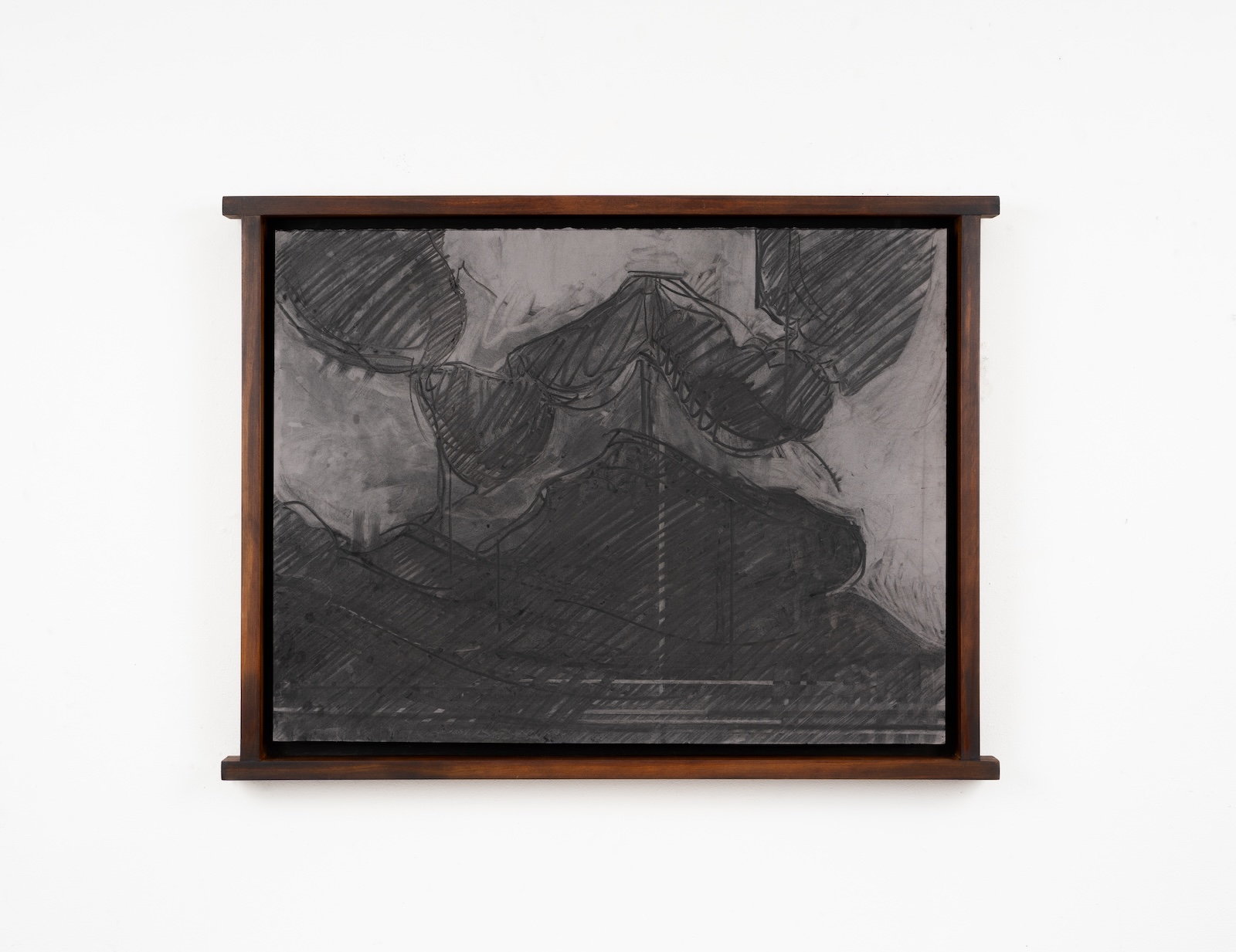
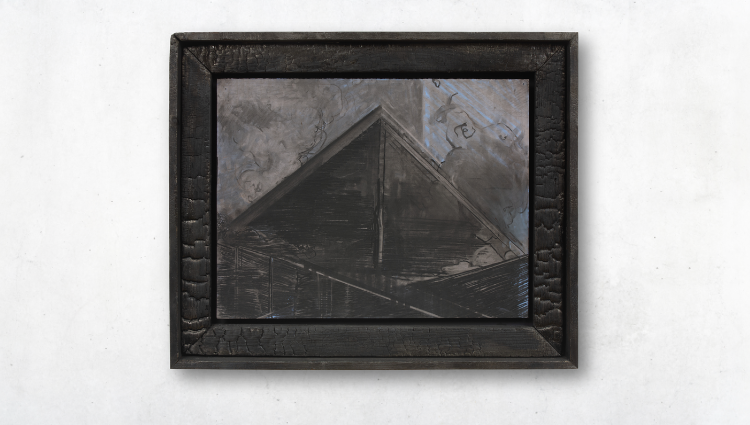
And you can see an artist statement by featured artist Beatrice Modisett.
Close"On Collapse" original call for submissions
This is the call for submissions, which is what the published contributors submitted work toward:
This anthology invites submissions that are primed to collapse. How might a story, or a poem, or an essay, collapse? Do they cave in on themselves? Destroy their surroundings? Explode, supernova-like, from within? What are the sights, contours, and sounds of these eruptions?
When James Brown collapsed to the floor each night while singing onstage, drenched and exhausted; when Truong Tran collapsed the separations between poetry and life in Book of the Other: small in comparison; when Saidiya Hartman collapsed the false promises of the archive in “Venus in Two Acts” — what kinds of unimaginable desires were they manifesting?
Queer theorist Jack Halberstam describes the aesthetics of collapse as “unmaking the world” through anarchist practices of demolition, dispossession, and failure. Collapse, then, might not be ruination, the rubbles of an unfulfilled dream, but the transgenerational desire to unmake colonial and imperial dreams that have, for so many, become a nightmare. What heartful and insistent compositions, what unrelenting wishes are made against the backdrop of what Black Studies scholar Nahum Chandler calls a “black horizon”? For this anthology, I welcome work across genres (poetry, fiction, nonfiction, visual art, & hybrid) that are inspired by the unpredictable, unimaginable potential of collapse.
Close