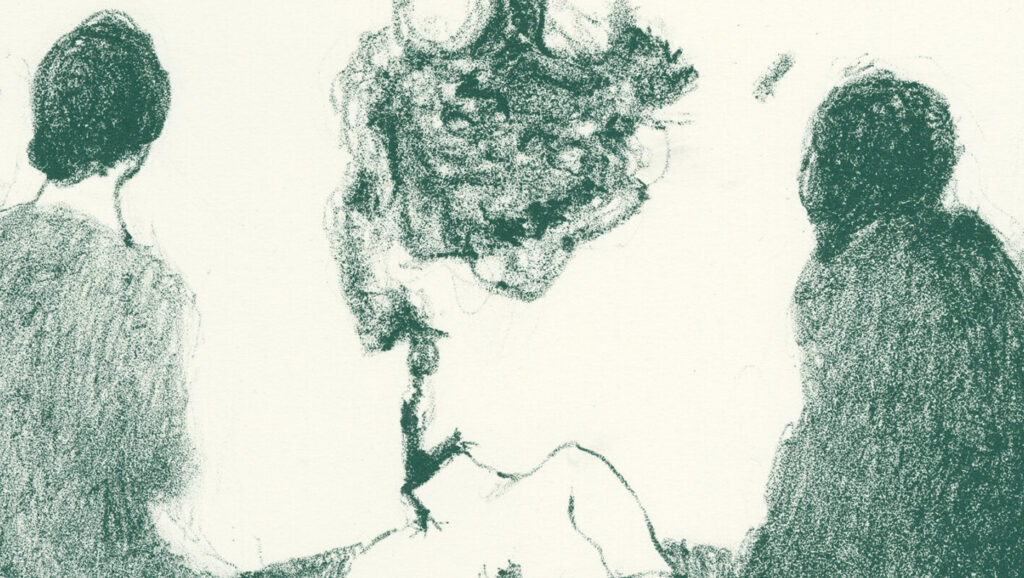
When we got to the sea, the waves were jagged, the clouds heavy and unsettled. The way Bee had described Dulan, I’d imagined golden sand. Sun warming our skin. But here the sand was compact and dark, studded with flat black stones. The wind whipped against our faces, coarsened our hair, sent spray into our eyes as we neared the water.
We weighted a thin blanket onto the sand with rocks, then sat shivering in our swimsuits. Goosebumps specked our arms. For some reason, Bee refused to wear the hoodie she’d brought as a cover-up. So I folded mine into my lap, feeling it grow damp in the sea air.
“We should go back to the hostel,” I said after a moment. “No one else is here.”
Bee cracked open a can of Apple Sidra she’d bought from the 7-11. Then she took a swig, throwing her shaved head back. I imagined the metal scraping against her teeth, the cold soda gurgling down her throat. A chill traveled through me.
“We’re staying,” she finally declared, indenting her fingers into the can.
Her skin had already turned a startling white. Her hands were probably frigid. I imagined twining my fingers with hers, my meager warmth radiating against her skin. Imagined her turning to kiss me, cool lips sweet with apple juice.
But Bee sat up, lodged her Sidra can in the sand, and propelled herself off the blanket. Without her nearby, I felt exposed. The wind rose as she approached the dark sea, the tide sucking at her bare feet.
“Come here,” she said, her glasses beaded with ocean spray. “We should both touch the water.”
I pulled myself to my feet, slid my sandals off, and moved in her direction. When I was close enough to the tide, she took my hand and yanked me towards her. Heat bloomed under my ribs. Icy seawater drenched my toes. Then underfoot—sharp electricity, a convulsive burning. Pain rocketed through my veins and seized the dim place behind my eyes.
“Shit!” I backed away from the surf and lifted my foot. There was no broken glass protruding from my skin. No blood. But a bright welt pulsed across the tender arch, pink and hot. Blisters were already beginning to form under the skin, pockets of white strung together like oblong beads.
Bee was at my side. She managed to tug me back to the blanket, lay me flat on my back. Through the hazy fugue of panic, I felt her icy fingers trace the outline of my swollen arch. Then she picked up a flat stone and scraped it across my foot.
Pain needled my skin. I writhed, clutching at the blanket. “What—?”
“Something stung you,” she said, kneeling by my ankles. Then she lifted the rock to my face, its surface smeared with some kind of jelly. “Tentacle residue. I got it all off.”
“Jesus,” I breathed. My blood felt barbed. With each throb of my foot, I pictured a spike of toxins traveling closer to my heart. But Bee was unfazed. She patted my shin, tossed the rock to the side, then inspected my foot again.
“It doesn’t look too bad,” she said. “If you start having breathing issues, then we’ll worry. But for now, you’re okay. Trust me.”
I did trust Bee. She’d spent her whole childhood in Taiwan before moving to Australia for secondary school. Now she was doing a biodiversity Masters at Academia Sinica. She was an adventurer, a traveler, unlike me—a coddled girl still in college, who was only in Taiwan to visit her grandmother over the summer. A girl who wouldn’t have left that cramped apartment in Wanhua District if not for Bee.
“Sure,” I mustered through pricking tears. Tried to even my breaths, to act as Bee would act—composed, devil-may-care. But a feverish halo of pain had settled around me, making my head throb. I couldn’t even relish how close she’d been to me, how cool her hands had felt against my skin.
Bee rose to her feet and walked towards the receding tide. I swallowed the impulse to call her back to me. Instead I checked my phone, which wavered between no service and a tiny bar of reception. Who could I contact? My grandmother, five hours away in Taipei? The nearest hospital? I could try to limp back to town, but it would be impossible without Bee. And if I did make it there myself, who could I ask for help?
“It’s just a bluebottle,” Bee called from the tide. I strained to hear her over the roaring waves. “We got those all the time in Sydney. Here, I’ll take a picture for you.”
She came jogging back, cell phone in hand. I craned my head to look, trying to ignore the venomous heat in my foot. The creature on her screen had a dumpling-shaped, translucent body, fragile as blown glass. A wispy, wet string stemmed from its underside, Kool-Aid blue, an alien appendage.
“They usually show up in groups,” she said, pocketing the phone. “I’m surprised we only ran into one.”
My head swam. I couldn’t answer her. She sounded so confident, so removed from the world of feeling.
“A bunch of these washed up in Hualien County a few years ago,” she continued, sprawling on the blanket next to me. “Residents saw them all around the shore. It’s because of agricultural runoff, you know. They put all this shit in the ocean and it makes algae bloom, so of course these things come out to feed.”
She made lazy gestures with her hands. I tried to hold onto her words, let them soothe the throbbing pain. I’d fallen in love with Bee because of how she talked. Assertive and encyclopedic, switching between English jargon and Mandarin slang, rambling about pollinators when drunk. At the lesbian bar where we met—girls draped on leather couches, slumped over counters—her eyes had gleamed with a strange knowing. She’d singled me out as American before I’d even opened my mouth.
“It’s because you look soft,” she’d teased that night, her English edged with an Aussie twang. “Like you grew up somewhere rich. Like everything is so easy for you.”
Her words had stung a little. Maybe I was soft. But I hadn’t complained when she’d told me to pack a weekend bag after our third coffee date. I hadn’t questioned her sudden desperation to see the ocean, her insistence that I join her. I hadn’t asked her to stop the motorbike the entire five hours from Taipei to Dulan, even though my locked limbs ached thirty minutes in, even though my bladder was full to bursting by the time we pulled into Taitung County. Instead I’d kept my arms tight around her waist, my heart fluttering against her back, our sweat melding us as we zig-zagged through the bright green mountains.
“Let’s go back to the hostel,” she decided now, rising to her feet again. “We’ll come back another day. Can you walk?”
My foot was still a live wire. The pain dizzied me; I could feel pressure building in my skull. But I still staggered upright, fumbling for balance. Wincing as streaks of heat shot from my arch to my thigh.
Bee looked on, finally extending an arm for me to take. “Slowly, slowly,” she drawled. “You’re okay.”
I hobbled a few paces on my good foot. Held back a whimper as the pain mounted. “I don’t think I can make it, Bee. I’m sorry.”
I could tell she was annoyed, even though she tried to hide it. “This happens to people all the time,” she said. “I saw a kid walk after getting stung.”
“So what?
She shrugged. “So maybe you should just deal with it.”
I couldn’t speak.
She shook her head, rounded the blanket, and plucked the half-finished can of Apple Sidra from the sand. “Sit down,” she sighed.
My legs buckled, forced me to obey. “What are you—”
“Shh. This’ll help.” She took my ankle, stretched it beyond the blanket and onto the cold sand. Then she emptied the Sidra can over my foot. The icy stream doused my skin, numbed the heat for a breathless second. But as the soda dribbled to a finish, I felt it again—a mounting, inchoate itch starting from deep within my cells, forking outward like slow-moving electricity. The needling pain seared through my foot.
Then it erupted into an ungodly blaze.
I bit back a scream. It was worse than before. Ten times worse. A thousand miniature fires were burning in my foot, blistering with radiant heat.
“Bee,” I moaned, clutching my ankle. “Bee, why the fuck did you do that?”
But Bee was already packing up her things, crumpling up the can and tossing it into her daypack. The pounding in my head got louder. Tears sprang to my eyes. My vision swam, blurring her sharp features, her downturned mouth, the entire gray beach around us.
“Bee—” I choked, reaching for her. “Please get someone. I can’t move.”
“Seriously?”
“Yes,” I managed, curling up on the blanket.
I wouldn’t be able to forget the way she looked at me then—coolly, flatly, as if I were a child. Something inside me splintered. “Fine,” she said. “Wait here.”
Where else would I be? I wanted to ask. But pain paralyzed me. All I could do was clench my eyes shut, set my jaw so I wouldn’t whimper. When I opened my eyes again, Bee was gone, leaving me alone on the endless dark shore. The tide was coming in. The wind whipped around me, pelting my arms and legs, sending sand scattering over my body.
I fumbled for my hoodie, drew it over my torso. Jammed my hands in the giant front pocket and let hot, shivering tears roll down my face. Currents of pain spiked through my foot; light pulsed behind my eyelids. I brought my knees to my chest, curled deeper into myself, folded the blanket over me like a makeshift cocoon.
Minutes went by. Tremors passed through my body—from the pain or the cold, I wasn’t sure. My leg went numb. A distant ache throbbed deep in my muscles. My face was wet, my lips edged with salt when I tasted them. My foot still felt sticky with apple soda, crusted with a fine layer of sand.
Bee hadn’t returned.
The sun dipped. My throat tightened, hoarse from dehydration. The tide was encroaching, the sand around my feet growing damp. The wind howled along the steep, ragged cliffs that towered above the beach.
Bee still wasn’t back. And I hadn’t moved, or couldn’t move.
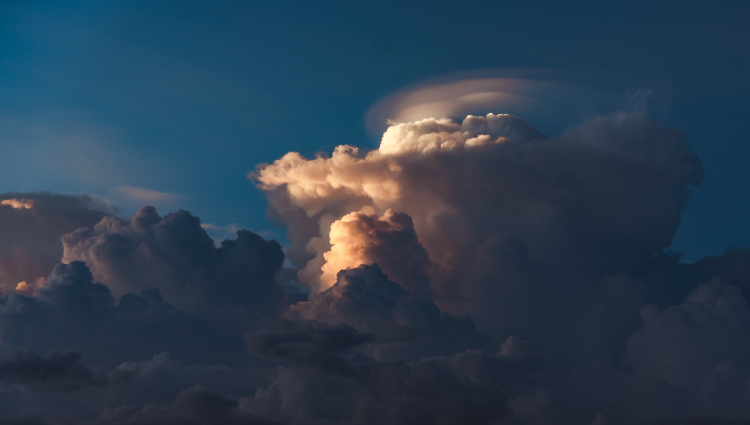
Sunset came. Dark, low-hanging clouds obscured whatever light remained. They glowed infernally just above the horizon. Before me, the water roiled black, threatening to swallow my ankles.
My body was frozen stiff, my mind still racing with thoughts of Bee. Surely she hadn’t gone back to the hostel without me. Surely she hadn’t left Dulan altogether. Surely she’d just had trouble finding a doctor. Surely she was coming back.
Then a startling light. Someone was shining a flashlight at me. I heard two sets of footsteps, men’s voices. They spoke to each other in Hokkien first, then to me in Mandarin: The beach is closed. Why are you still here?
I tried to open my mouth but couldn’t. My limbs felt formless and heavy. From where I lay, I couldn’t make out any sign of Bee in the darkness—her bright eyes, her taunting voice. Venomous longing leaked out of me.
The men stood over me, waiting. Then I saw myself from their eyes: a fragile body curled onshore. A blanket collapsed translucently over formless limbs. They sensed danger from me. They would not touch me. Under the glare of their flashlights, I realized it—that all my life, I’d been desperate for the right foot to crush me. Until it found me again, I would not move.