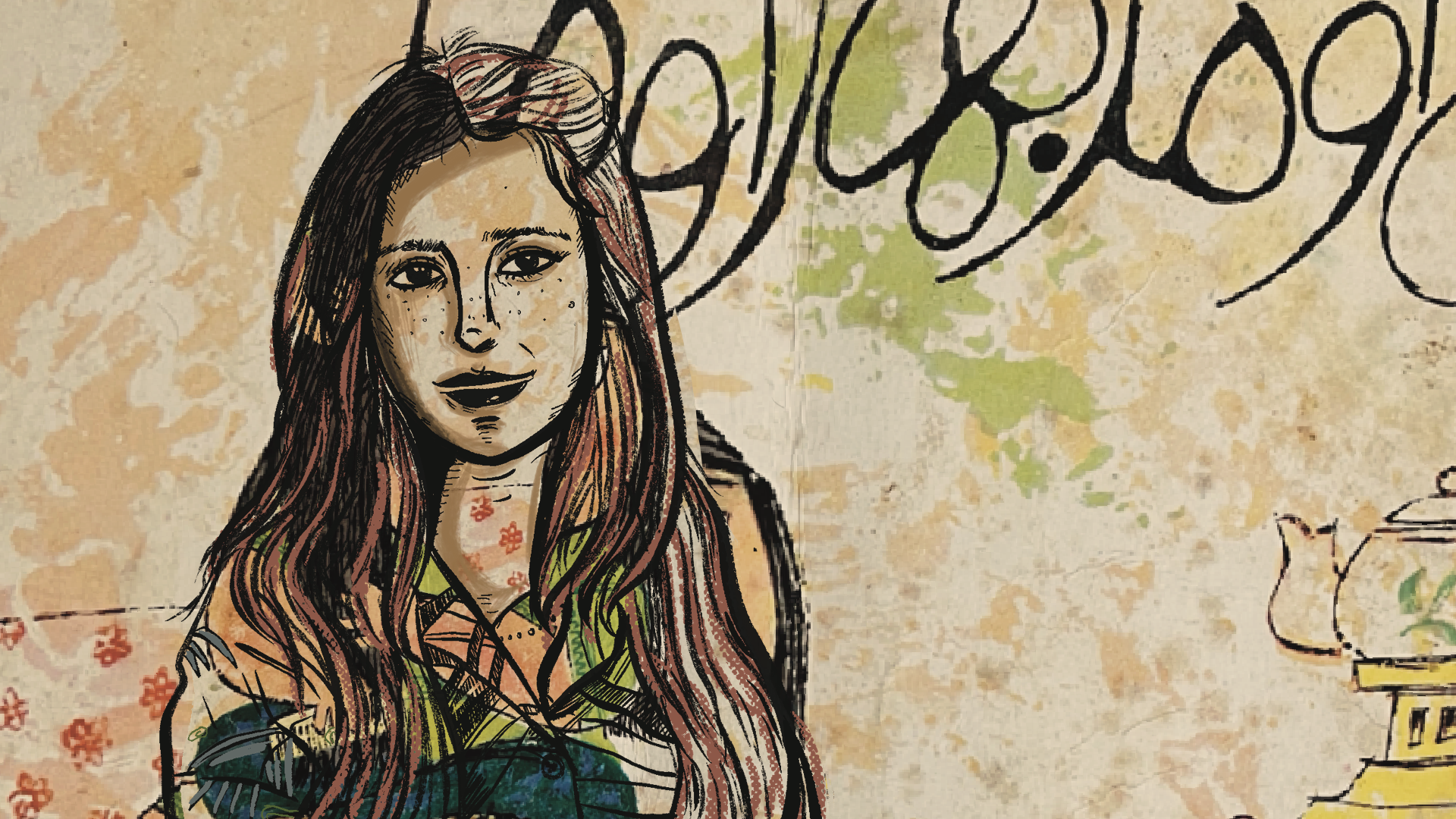
In Arabic, there are twelve gradations of friendship. I think of them often as I watch the layered shadows of shoulders—the mountains: powder pale cyan, sky wash sapphire, and then verdigris blending into a ravenous indigo. Each hue a threshold, each ridge a rung in an ancient ascent.
I wonder how many eyes, born hundreds of millions of years ago, have braved and witnessed their endless procession—seen all their levels?
The first rung is صدیق Sadeeq: a true friend, one whose nearness bears no ulterior motive. Even at its inception, friendship demands sincerity. Sadeeq derives from sidq, truth, so the bond begins not in affection, but in honesty.
Now, nearing forty, I think of the Sadeeqs who have steadied me through seismic shifts. One in particular surfaces as I drive up the Blue Ridge Parkway, mountains rising like islands from a sea of cloudless sky, an elegy of ancient summits softening into haze. The vastness of my view cradles me, listening as I stand, thinking of my own origin/ the sadaqat of the friend who carried me across.
1. صدیق Sadeeq: a sincere friend
“Would you have some time today?” he asked on a January day, his voice soft over the intercom.
I was deep in academia’s snarled syntax: strategic plans, corporate-slick OKRs, jargon dressed up as care. A spreadsheet sprawled open on my screen, my fingers crunching speedily from the savior complex. That day, uncharacteristically, I said yes, eager to get off the extension phone. The line clicked off with a warm, laconic thank you and my head drowned again in an excel sheet.
I held two offices in an academic glass building of a university then. Of the two, everyone knew which one I loved more: the upper-floor room with its wall-length glass, warmed in morning light. The other a dungeon, an academic support center and a peer tutoring hub. I was in the writing office that day, where I taught, hosted poetry circles, gathered thank-you notes and post-its. Students wandered in to share drafts and literary daredevilry. I was not even packing when the light had begun to drain and team members were filing out, calling their goodbyes. I kept typing, waving over my shoulder without turning, eyes fixed on the screen of an expensive, company-issued machine tethered to my title.
I didn’t hear the office’s glass door creak open, its hinges protesting. A gentle voice/ not a goodbye/ asked, “Q, are you ready?”
Without looking up, I said, “Fifteen more minutes.”
Silence. Thirty passed before I realized I hadn’t imagined the voice. I turned.
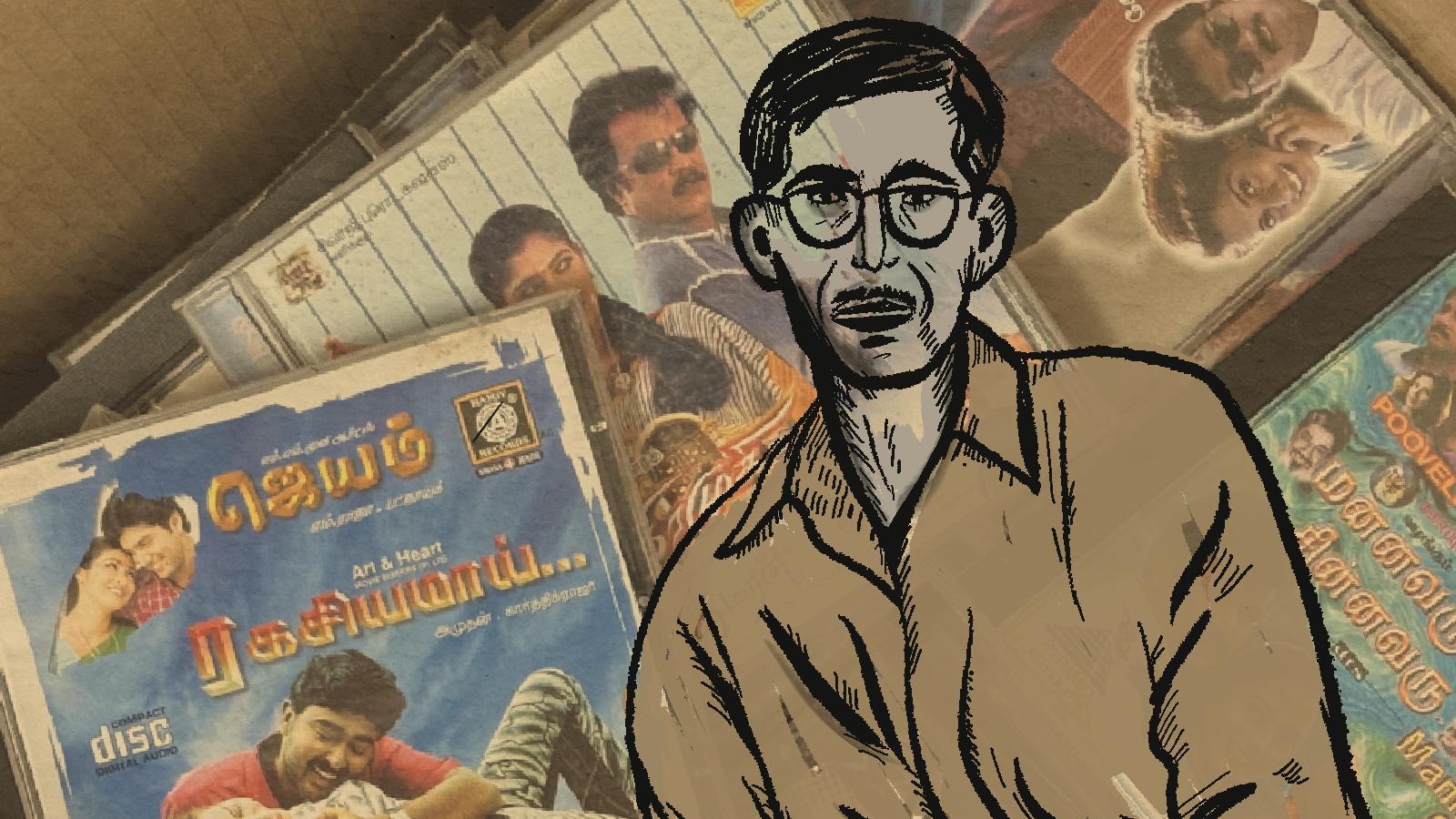
He sat on the sofa in the corner: a book, some printed pages, a shawl beside him. A sunlit smile behind glasses. His beige cable-knit sweater had been chosen for memory. Around his neck, a matte pendant glinted. It was my young colleague, Habib. His pants, dark and unobtrusive. He sat with the ease of one leg folded, the unselfconscious posture of someone raised close to the earth.
2. زميل Zameel: A friend you have a nodding acquaintance with.
Habib was a recent graduate of this university and now a colleague. He belonged to the group of people I had inherited as friends/ originally my decade-younger brother’s university peers, who had studied here and later returned to work. While I joined in academic leadership, Habib came on board as an academic advisor.
He had many names. In university journals, group emails, and his poems, he declared himself as Haa Meem: his initials, yes, but also the untranslated letters from the Quran, recited by believers for healing, safety, the power of the unknown. Most called him by his first name: Habib “the beloved.” I began calling him with a third endearing one: Koh-e-Zaat.
Raised in Khaplu, a village nestled at the foothills and a gateway for mountaineers to Masherbrum, K6, K7, and Chogolisa, he was a young man in his twenties then. Kind, respectful, always listening. In our affinity group meetings, we often spoke of his home and heart of his writings, but this was the first time I was to meet his poems in person.
“What are you doing here?” I asked, startled.
I had forgotten our earlier exchange and was surprised to find him alone on the sofa. The building dimmed as maintenance shut off lights across the university/ universe of corridors.
“You said you had time today,” he reminded, humbly and undeniably.
“I did?…Yes, I did.” I sighed, a mix of frustration and relief. I was glad to be pulled from what I had been doing/ work that drained me completely. “What do you need?” I asked.
“Just a walk… and some advice on my poems.”
“Oh, sure. Coffee first?”
My reflex to care kicked in, that instinct/ an unreserved part of myself. I didn’t even know how he liked his coffee, or what kind I made that day. I have never been a coffee drinker but hosted a machine in my office for anyone who was. By anyone I meant some inhabitants of this academic cosmos.
Every morning, they gathered at the coffee station near my desk, telling stories from the weekend, sharing project updates, laughter marked as “staff meetings” on my calendar. Then we drifted to our desks, a little less alone. The coffee made me useful. It gave me purpose, even just for a day.
3. ندیم Nadeem: A drinking companion (just tea) that you might call when you’re free.
He poured the coffee, steam curling from both cups. I closed my laptop, still buzzing with incoming notifications, and followed him out. We sat in a quiet garden under open sky, foliage whispering, a fountain murmuring nearby. This was his sanctuary, his sliver of hope in our city of nineteen million (my Karachi/ his Karachi?)
We spoke of his poems, trilingual and hand-bound, time slipping past even as we lingered on one: Koh-e-Zaat. A quest of his mountain-soul in this choral, chaotic city. Starless sky, siren sea, city of lights and loss. A place that held thousands of Shi’a Muslims like him and swallowed hundreds more year after year—Haa Meems lost to the fury and fire of sectarian strife and بوتل bombs. All in the name of the names they held—Abbas, Raza, Rizvi, Ali—their confessions of guilt and allegiance to the children of the Prophet. People meant to be their own but not quite so.
Our greatest distance wasn’t age or gender, but belief and the places that raised us. Mine, built to misunderstand his. My silence, complicit. My comfort, a kind of ignorance.
Yet when we read poems, the bloodlines blurred. We never spoke of massacres then. Only of unrequited love. What do you do when the people and places you love cannot/ will not love you back?
4. سمیر Sameer: A friend you have good conversation with.
He asked me if I ever thought about unrequited love? Of places where we do not feel welcomed, our bodies an intruder, our existence ill intentioned, our breaths a ticking bomb? He asked me this perhaps persuaded by my age and an assumed wisdom that may have come with it.
And then he asked, “Would you have loved him even if he didn’t love you back?”
By “him”, Koh-e-Zaat meant my husband/ my love of almost two decades. It didn’t surprise me. This sudden question: both private yet relevant to the subject of love at hand. A subject he loved to speak of ever so in everything he wrote. His questions always curious, unflinching, non-transactional. A child raised by nature, not like us. He spoke with the measured pauses of poetry, the nectar of his people’s wisdom settling in his voice, switching between Persian, English, Urdu, Punjabi, Balti—the Tibetan tongue touched by proto-Iranian Dards, his mother, his زبان.
Balti, also the زبان of his home Khaplu, Skardu, Gilgit-Baltistan that he often showed me the blooming pictures of. A state our mother country does not give her name to. Pakistan not recognizing Koh-e-Zaats, unnamed echoes no right to vote or representation, resources & revenues usurped, no state subject rule denied. Its existence has been suspended, unnamed, ever since. In 1947, the Koh-e-Zaats asked to be held by Pakistan, to be written into its story, and Pakistan refused — because the land was tethered to the Kashmir question. That same bone lodged between India and Pakistan since the blood-slick birth of both countries. But these Kohs, of owning and disowning, were too steep for people like him and me to scale so we did not speak of them then.
In the flatter of the moment, in the quiet weight of being asked about love by a child of wisdom, I said:
“I would have loved my husband nonetheless, Koh-e-Zaat.”
Though I knew nothing of unrequited love in the city I lived with, in the love I lived in.
“When is love about حُصُول?” I continued. “When is it really an acquisition, a marking of territory? Do the mountains, blessing the valley with bloom, think of reciprocation? Does the rain consider how it is received—in a pail, in palms open wide, in disappointed sighs? The rain sheds its tears, and finds valleys to pour its love into.”
I wanted him to hope for a better world, the way I did.
5. جليس Jalees: Someone you’re comfortable sitting with for a period of time.
As we looked up, evening reds loosened their grip on the purples streaking the sky. I softened my tone, hoping to draw out his smile.
“I would have loved him,” I said, “if he were a woman, a unicorn, a flower blooming in this garden, or born in another world, another country. In every lifetime, I would have loved him, no matter the shape he found me in.”
I smiled, a little spitty with suppression, and began to gather my things—a quiet signal that the evening, of poems, of sitting silently with a younger friend, was ending.
I didn’t see it then: how ignorant I was of unrequitedness, how crude my certainty sounded. I spoke with the confidence of someone who had never known that kind of pain. I spoke of love beneath a sky that, just months earlier, had been sealed shut—no planes, only veining blues above a city spared. Air space closures and war borderness every time our neighboring country was perturbed. A little nuisance of bad internet and discontinued service, yes, but I had not lived on the bordering Kohs, had not carried a heart and body shelled and bombed in war, violated in ways people like me, in our glass offices, could choose to unsee.
The first half of 2019: No one could come. No one could leave. A suicide bombing in Kashmir. An airstrike in Balakot. A cold war of shadows with a neighbor. Not quite peace, not quite war. And still, we sat at our desks, writing poems about kindness, about rain that never refuses a valley.
6. صاحب Sahib: Someone who is concerned for your well-being.
Each morning, on my walk to the office, I greeted students with the same questions—“Did you eat today?”, “Are we hydrating, kid?”, “نیند پوری کی ویک اینڈ پر “
Sometimes I ate alone in the cafeteria, stealing a moment in the sun, until a student joined me. We’d talk about anime, the limits of linear storytelling, the chaos of undergrad, and the children we once were.
One day, a student asked,
“I wonder what kept you afloat during a difficult phase of your life?”
Without hesitation, I said,
“Being a teacher. You. Poetry. Yes, stolen moments from work and conversations with young people like you…Thank you for letting me borrow your light.”And then I quietly retreated to my office.
At home, as my dinner table brimmed with food, I often wondered what my students, far from their own homes, might be eating. If they remembered to turn the stove on. Or off. If deadlines left them hollow and hungry. Once, a student from my reading group told me how much they liked the homemade boxed pastas I handed out at an event.
“Miss, what herb did you use? It leaves such a nice taste in the mouth.”
Miss: a title generously bestowed on teachers in this postcolonial corner of the world, littered with madam, sir, master, where names are swallowed in deference, and shadows grow larger than selves.
In my office hung a wall-sized map of Pakistan. Students came in and pinned their homes: Toba Tek Singh, Ghotki, Dera Ghazi Khan, Dera Ismail Khan. Homes without libraries. Homes rarely spoken of. Beside the pin, I asked them to write their first language, their favorite food. We spoke of traditions, of grandparents, before the papers reached my desk. Sometimes they brought sweetmeats—Paida—carried over a two-day bus journey, wrapped in pride. I had to paste a separate poster for Gilgit-Baltistan (Gray in the main map sold at the stationery stores) to include some young ones originating from there, to affix its existence. Talking about home gave them comfort in the midst of test deadlines, another instant-noodles dinner, and failing public transport.
I remember, though not linearly, how food became my language of care. One day I brought biryani for the team. Koh-e-Zaat, part of our larger department, joined us. I served others with pride. The biryani was slow-cooked, layered, and praised. I basked in approval, loud/ self-assured, and missed the obvious.
Haa Meem, mountain-born, sat quietly. His plate was still full, rice clumped. He drank water in gulps. I remembered all of a sudden. I had once asked what he ate back home: mantu dumplings and Oltan Qoq, abundant with mulberries, walnuts and apricots. I remembered how my mouth watered, as he described their preparation.
But that day, I failed to see it. His body, acclimated to sharp winds, couldn’t bear the razing heat of our spices. His body, foreign to our dweller of the city/ Shehr-e-Zaat logic of heat, sweet, and sweat.
I had forgotten the divide. I was offering care, but I wasn’t listening.
To be a real friend is to listen: deeply, generously. And when we don’t, when we confuse intention for understanding, we cause discomfort. We cause harm. Haa Meem sat with reddened eyes, biri-biri, gulping and slurping oodles of water while I shifted on my chair in discomfort and silence as a witness.
7. انیس Anees: Someone you know intimately and feel deeply comfortable with—
accepted for exactly who they are.
Once, he sent me a photo of himself cloaked in the black shawl I had gifted him. Koh-e-Zaat adorned it while moderating a literary festival. The shawl bore lines of my favorite nazm by Faiz Ahmed Faiz, chosen for how (I thought) it captured him. This person of calm, quiet kindness who advocated for what is right:
بول کہ لب آزاد ہیں تیرے
Speak, for your tongue is free.
Speak, for your life is still yours,
Coursing through you.
Then he told me he had posted the photo on Facebook. A rarity.
What stilled me though, was the caption he posted with it. In Farsi it read:
ا شئ! أريد فقط أن أقول اللعنة عليك لجميع المتعصبين.
اللعنة عليكم، يا حفنة من البلهاء!
لا أعرف هل أضحك على غبائك أم أبكي على قسوتك.
فليلعنك الشيطان مرارا وتكرارا، وإلى الأبد في الجحيم
F**k all the fanatics.
F**k you, you bunch of idiots!
I don’t know whether to laugh at your stupidity or cry at your cruelty.
May Satan f**k you again and again in hell, forever.
I couldn’t imagine these words in his voice. I had never seen him angry. But there, in those asterisked fucks he translated in English, was a rupture.
Loving a friend raised between stone walls and apricot trees, made to live between the whisper and the wail, is to come to understand this: he smiles like a breeze and curses like a prophet wronged. It shouldn’t have shocked me—knowing just a fraction of what he’s seen and who he’s buried—but it left me shaking nonetheless.
One of the mortal massacres of his people happened even before he was born—when I was alive in this world of hate and he was not. Eid turned blood-soaked. Nine hundred of his people were killed by men of my faith, Sunni muslim men from Chillas, alongside Afghan militants led by Osama bin Laden. The land became a place of karb كرب and bala بلا, only because his people—the Shi’a Muslims—mourned the Karbala massacre کربلا. Their courage to hold grief earned them more: ostracization, threats, and the brand of kafir. Infidel. Unbeliever.
One of the central acts of worship among Shi’a Muslims is the mourning of the unjust massacre of Prophet Muhammad’s grandchildren and their kin. I know and feel this because like Koh-e-Zaat my father was Shia too and so was my name. I had witnessed remembrance—an act of love and loyalty to the Prophet of Islam and his children—has long earned the Shi’as slurs, exclusion, and in many places, the threat of death from the majority Sunni sect, the dominant voice of Islam, the branch faith that I had chosen to practice. In a country where faith seeps into the constitution, where belief and law blur, and where a mere accusation of blasphemy can cost a life, such mourning becomes the gravest crime. To spend fifty days each year in grief—dressed in black, abstaining from color and celebration—only to be attacked during those very days is tragedy upon tragedy. There is a transgression to being a Shi’a — worse is being a Shi’a from Gilgit-Baltistan.
And so he curses—not in defiance, but in inheritance—his history spilling softly through his gentleness. He is right.
Fuck them.
In rare, raw clarity, I let go of my verbal hygiene and joined him in cursing the hate and warmongers. They are not mine. Their morphed faith of cruelty is not mine.
Later, I scroll and see how he photographs cherry blossoms—arriving too soon, like martyrs. He follows the light down to ravening streams in his mountain home, as though always searching for proof that this world is still worth loving.
Through all of it/ grief, injustice, silence/ he remains kind. Curious. Whole. A boy never meant to fit in. One who cannot glaze his tongue with biryani spice to belong to us, the Shehr-e-Zaats of the city.
This is how I will remember him after he leaves this dungeon of glassy academia, and if I am lucky I may meet him again someday chasing light in his mountained home.
8. ناجية Najiyy: A confidant; someone you trust deeply.
This is how Koh-e-Zaat escaped. One day he came with the outline of his future in hand: an art residency he hoped to found back home: The Simurgh Creative Retreat. He described it as a transformative space rooted in the spiritual, ecological, and cultural landscapes of Gilgit-Baltistan. He cited the mystical tale Mantiq al-Tair by Attar of Nishapur, and the Prophet Muhammad’s hadith: “من عرف نفسه فقد عرف ربه” (“One who knows himself, knows God”).
He envisioned a journey: forty days, thirty participants, across seven symbolic valleys. Each valley reflects a stage of holistic growth: physical, emotional, intellectual, spiritual, communal, and transcendental. He spoke of precolonial pedagogies—Islamic, Hindu, Sikh, Buddhist. Of indigenous knowledge systems, experiential learning, reorientation and reconnection with the self, the natural world, the divine. He wrote of creativity, sustainability, humility حلم, sincerity خلوص, generosity سخاوت, and justice عدل.
His words were vast. His dreams, vaster.
He said, “I wanted you to see it first.”
“Go live it,” I said, returning his draft.
As my own five-year plans ran dry, as blank planners stared back at me and I slowly embraced a state of being unsurprised, I found myself rooting for him, borrowing the light of those still brave enough to dream of the healing world.
9. رفيق Rafeeq: Someone you depend upon.
On a March morning, I walked into Koh-e-Zaat’s communal office space for a meeting with his team. His desk, tucked into a corner, faced away from the entrance. Usually, he turned at the sound of my voice, offering a coy smile before I passed. But that day, his head was bowed lower than usual, his gaze fixed on the edge of his desk. The wooden cabinet behind him was spangled with monochrome, hand-calligraphed Persian letters—shapes, names. His gaze, fixed and unblinking, was not ordinary.
I slid a chair beside him and handed him a cup of coffee. This time, he showed me a play he had written. Its protagonist was trapped in the karb كَرْب of gendered expectations—driven toward despair and to their end by a world that punished softness, beauty, and the right to adorn. Unprepared for the ending, I let out a small, surprised sniffle. We sat in silence for several minutes afterward. Not much was said before I was called back to work.
On most days he preferred solitude, save for his two close friends from the city who often accompanied him to art galleries and the literary festivals we both adored.
“Do you like it here, Koh-e-Zaat?” I asked one day.
“Of course,” he replied. “For the art. For the people who aren’t homogenous. Who don’t think or speak the same language. I see the world splitting into tributaries here. I feel like I am transforming.”
However, one spring day shifted in an obscure way, a کر وٹ I had to be prepared for. A senior had already told me what had happened as I approached his desk. Koh-e-Zaat turned at the sound of my steps. His gaze glassy when he called me by my name.
“Q,” Koh-e-Zaat paused for a tidal breath “He told me… He told us. And we didn’t listen.”
I sat beside him, his back still slightly turned away, his head bent in a bow that felt unending. I let the silence stretch, let his breathing settle, and waited.
“He said he would jump in the river,” he whispered. “And we laughed.”
ہاں جا کود جا ندی میں
“Yeah, go jump in the river.”
He mimicked the others in a receding voice, fingers jabbing, and laughter toppling over itself like careless children playing with fire. And so the river Shigar embraced the lion.
“Q, he left. He left, Q. We didn’t hear him.”
After a few more minutes of silence, Koh-e-Zaat excused himself to the bathroom. The tissue on his desk fluttered then, caught by the slap of the sputtering A.C. I remember too clearly what it read:
حیدر جوان، تیرے جانے کے دن نہ تھے
Oh our young Haider, it wasn’t your time to leave yet.
His friend’s name, Haider, meant lion. The brave/ forced to be brave. Unheard.
He had lost a friend to the Mother Silence, the loss of listening, even in love. The grief of the former, I could not claim. But the devastation of the latter, the smallness and vastness of it, I had a glimpse of. The violence of not listening in care.
That week, we painted. I brought all my supplies/ palettes, soft brushes, whatever gentleness I could carry. We sat in a rectangular room, brushing petals onto the lids we painted/ mine in translucent fuchsia, blots of cobalt cornflowers; his in acrylic oranges and gouache yellows.
In the sharp awareness of pain, pressing each of us to the corners of that room, we didn’t try to push it away. We touched it lightly, with a Cotman number two brush, brimming with a single wet drop, tracing the earlobes of short-lived spring flowers. Abandoned beings, resting their heads on the grass, drooping lower each day.
10. خلیل Khaleel: An intimate friend whose presence makes you happy.
Life took Koh-e-Zaat back to his mountains, where he retired to pursue his dream: a sanctuary he had drafted a year ago for artists and poets, a retreat where creation could be nurtured. It took him some months to visit again. In the burning heat of Karachi’s mustard April, while I battled another hoard of urgent/ pungent emails, he came bearing gifts.
Each season, he had told me, he spent time alone in the mountains, meditating far from home. The quiet, he said, was his friend. “When you go into the mountains with pure intentions, they give you gifts,” unclasping his palm on that April day. Inside were small, multicolored stones, smoothed and shaped by the gushing rivers he had walked beside all year.
“I’ve been collecting these for you,” he said, offering his half-shy smile as he placed the stones in the basin of my brown palms. “Reminders of goodness and lap of valleys”
I stared at them, then looked up.
“So, do you know then?” I asked.
He looked puzzled.
I turned my laptop screen toward him. An email sat in my inbox, unopened for weeks—an offer of admission. A writing program nestled in the Blue Ridge Mountains. An invite in a valley to hold in creation.
“Is this a sign?” I asked, the same way he once asked if he was allowed to dream.
His eyes lit up.
“Q, you must go,” he said. “It’s calling. The Koh.” His hands covering his mouth to suppress a brimming smile. Also something like: it’s time you let the rain find its valley.
On April 15, 2024, I wrote an email that said: ‘Yes.’
11. قرين Qareen: A friend who becomes a part of you.
Few months later, I tendered my resignation with the required three months’ notice. I packed a few bags, bought books and carried several copies of Faiz, Parveen Shakir, Ghose and Intezar Hussain across the Atlantic. Some recollections return like muscle memory: leaving home, a career of two decades, the life I had known. My spouse of several years could not accompany me because of the law and bureaucracy of this new land I was to enter. On a summer day, I stepped onto a quiet, nearly deserted campus. A professor, hand on a key, turned toward me. He extended his hand, humble, almost father-like, though not old. I knew his name, of course.
By November 2024, with a tectonic movement of votes being cast, the valley had reddened. In the fog of the mountains, I became someone who had to repeat herself often. My words muddled against the windscreen, syllables slow, stresses misplaced. I was locked out of meaning again, surrounded by mountains, not yet able to laugh at it. At drive-thrus, even a simple order of “Vanilla Sundae” in my stressed vowels and accent could not be understood.
Sometimes I called Koh-e-Zaat from those mountains, asking for insight, for survival tips in the changing weathers of Koh. I told him he was right. Time in the cities, in endless summer, passed the same. But here, time moved in colors, in trees, in the rage and ebb of water, before dissolving each night into a sky of stars I dared not look at. I dared not look at flashing images of Khalil’s wife screaming, asking men in civilian clothes where they were taking him. Ozturk’s scarf tugged against her nape as they pulled her to the ground. Ozturk, Khalil—students on this alien land, like myself—punished for naming the oppressor in the laps of a university. A world lit with California fires; thirteen months and more of the world in rubble and acrid air, gooey shoes, a new acronym taking birth—without anesthesia: WCNF (Wounded Children with No Surviving Family).
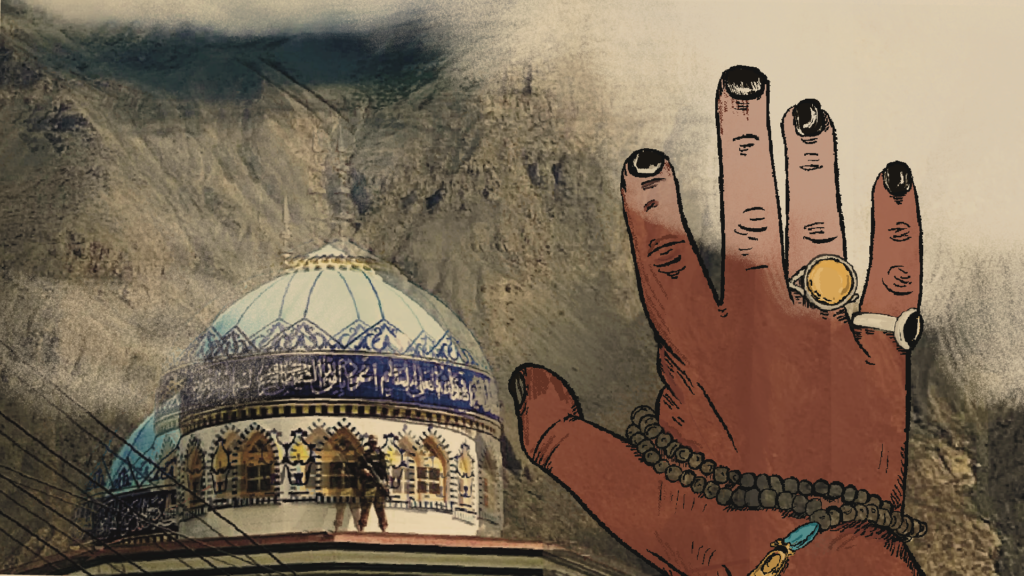
Time warped, reeling into crimsons. Zones never matching. My loved ones sleeping on the other face of the globe while I stared into mellow yellow mornings, leaving messages on Facebook like letters, hoping someone might be online. I scrolled through images of Koh-e-Zaat’s hands, searching for proof he was okay when we couldn’t speak for months. He rarely posted his face. Only his hands, fashioning bracelets from stones of his valley. A bronze karra, etched in Arabic, circled his wrist, a sign of his Shi’a devotion. On his pinkie, always, a firozi stone set in silver. Sometimes, a deep red aqeeq adorned the ring finger—a talisman tied to Karbala, to Iran, to the Prophet’s grandchildren, and to his own quiet rage against injustice. His heart had walked the golden desert of Husain Ibn-e-Ali’s martyrdom, of loss, of a beloved seen as an intruder. A thousand times in dreams, maybe once or twice in waking life.
From a screen, and in the absence of my companions, I braced for my first true encounter with darkness. When the glorious fall of the mountains gave way to night, I felt a blackness I had never known. I had lived as a Shehr-e-Zaat in a city of lights, where stars went unseen, sky forgotten. My identity shrank beneath ranges vast and endless. Thousands of guests of the land with valid visas and invites were revoked. I type and then backspace all my messages, asked not to write anything in retaliation.
The weeks welted and flashed as I sat on the floor of my borrowed home. A diminutive tomato-colored cabin, filled with my cries streaming into my palms/ like water droplets on 300 gsm paper. I wondered if I had made a mistake: this new country, this new language, new laws of living and loving. That I would always be an outsider, never know the hidden rules, and always be a militant. Shrinking, I drew my kitchen curtains against the impending dark.
And then, in the thick of it, I fiddled with a pen in a classroom. Unable to write for days, my head was crooned in the felt cover notebook before me. I heard footsteps, peers entering, and then the voice of a professor. He always brought something with him: snacks, a book of poems, a letter of hope, a verse to be opened when pain had no home. His pocket often held small objects: translucent green dice and paper figurines. That day, his pocket jingled with something else. Reminders of us he had found on a morning walk along the Tinker creek, he said. Handing one to each of my peers, he placed a stone in my hand, his wrists wrapped in stoned bracelets. Warmed from his pocket, this stone found its new home in the basin of my hand.
I took the curtains off my kitchen window when I went home that day.
The darkness sifted through the window screen, touching my closed eyelids with its fingers—and then came an embrace spangled with fistfuls of stars. I noticed, for the first time, the firefly-filled front yard, their yellow winks stretching the corners of my lips. At dawn came the shower, its splatters on the windowpanes, the creek gushing exuberantly, a butter-yellow sunrise tiptoeing into the living room. A starling stared back at me through the glass—quick, excited jerks as if to study me. I was no sight to behold—on the contrary, a bewildered Shehr-e-Zaat with eyes still warm from a spell of crying.
I broke into a smile, and then a dua, as I unrolled a jae-namaz to offer my fajar prayers. The supplication filled my home:
فَإِنَّ مَعَ الْعُسْرِ يُسْرًا — So, surely, with hardship comes ease. (Qur’an 94:6)
I began to touch specks of the promised hope—embodiments of my ease. This borrowed home was mine for now. I was not a Koh-e-Zaat, no. But I had come to the mountain with good intentions. And to that finding, gifts were offered that week: a near stranger/ new friend folded a paper crane for me, another offered a clementine, and in my mailbox, I found a pleated print of the poem “Sorrow Is Not My Name.”
12. صفي Saifiyy: A friend you choose over others.
In the spring of 2025, air spaces and home, close again. An attack on the mountained town of Pahalgam, families torn apart as Sindhu water is threatened to be cut. The heart that beats and the river that veins through the palms of the country to be blocked. Not quite peace, not quite war. And in this tremor of Pahalgam, this ache of river and ridge, I feel again the old hush between knowing and unknowing, the vastness of violence and ranges/ an arm numbing to the ache. I write a poem on fragile and persistent love, to shake it. Even here, across continents, the mountain asked again whether one small blossom can hold an answer against a century of blood. I send Koh-e-Zaat pictures of my first apricot blooms along the Blue Ridge Parkway. I write to him, I write of him, and I borrow some of my friend’s light.